
Why Reclaimed Wood Changes Everything

We tend to equate new with better in construction today. New materials, new finishes, new manufacturing methods. But if you really look at the actual impact that buildings have on the world-and the people in it-this equation begins to crumble.
One of the most powerful and direct illustrations of this shift is reclaimed wood. When you first think about reclaimed wood, you may envision only recently used timber. It appears to be a more modest, less polished substance when contrasted with fresh materials. In actuality, however, it is a tangible demonstration of the fundamental ways construction concepts are changing.
For better.
Consider two interior environments: Environment A: created with brand-new hardwood. Everything appears flawless.
The surface is completely smooth, with uniform color and no discernible imperfections. Underlying that smooth perfection is a vast system of logging, chemical treatment, milling, distribution, and endless energy consumption.
Environment B: Crafted from reclaimed wood.
This material was sourced from antique farmhouses, disused industrial structures, or deconstructed commercial buildings.
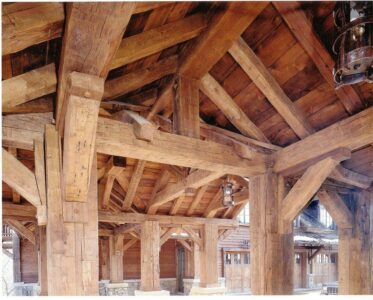
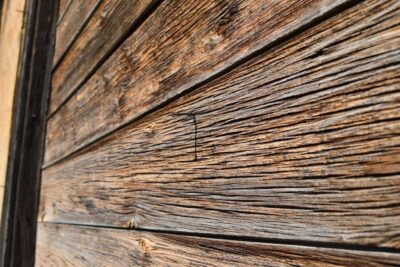
There are likely few perfect lines, some variations in color, and the patina of time etched into its grain. The most interesting part about these two environments: most people who enter Environment B say they feel a sense of warmth and welcome. They note the natural feel and comforting ambiance. This response is not solely visual; it’s deeply psychological.
Humans are drawn to the history and texture naturally present in our environment, and reclaimed wood brings a tangible connection to time, memory, and imperfection into space.
More than just psychics, reclaimed wood is deeply environmentally smart. Using reclaimed wood directly diminishes the need for logging new trees, reducing forest destruction. It lowers a building’s embodied carbon, the total emissions associated with manufacturing and transporting building materials.
Simply put, it conserves resources that would have been consumed producing something that already exists. This is where the principle of a circular economy becomes a reality. Instead of: Extract, Produce, Use, Discard. We move to: Recover, Reuse, Reinvent. This seems like a small change, yet the implications for an industry that’s a major contributor to global CO2 emissions are enormous.
But that’s not all that’s intriguing.
The application of reclaimed materials actually inspires new ways of designing buildings. When a designer works with reclaimed wood, they are no longer just working with a “standard.” Instead, they are improvising with color, texture, form, and a rich backstory. That, more than anything else, encourages creativity and de-emphasizes standardization.
And it certainly impacts the experience of a space.
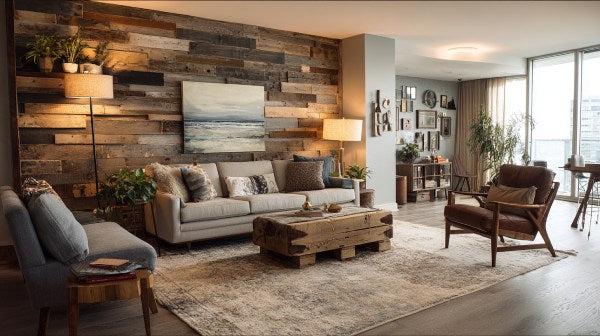
A reclaimed wood feature wall, in a home, office, or restaurant, can become a focal point without trying to. The subtle irregularities become more beautiful to human eyes than any flawlessly manufactured substitute. In terms of its environmental significance, it helps to marry ethical responsibility with our personal experiences.
A building then transforms from a structure that is merely efficient or regulation-compliant. It transforms into a structure that is meaningfully constructed. So in many ways, reclaimed wood represents a larger conversation: we are transforming from purely technical approaches to buildings into integrated approaches that are simultaneously considering our environment, health, emotion, and a new definition of material intelligence.
Which then leads us to the most critical question of all: if we can simply recycle an existing building and turn it into a brand new one… then what percentage of today’s “new construction” is actually required?
Reclaimed wood doesn’t just help save some lumber; it is the challenge of the definition of ‘value’ within construction.