
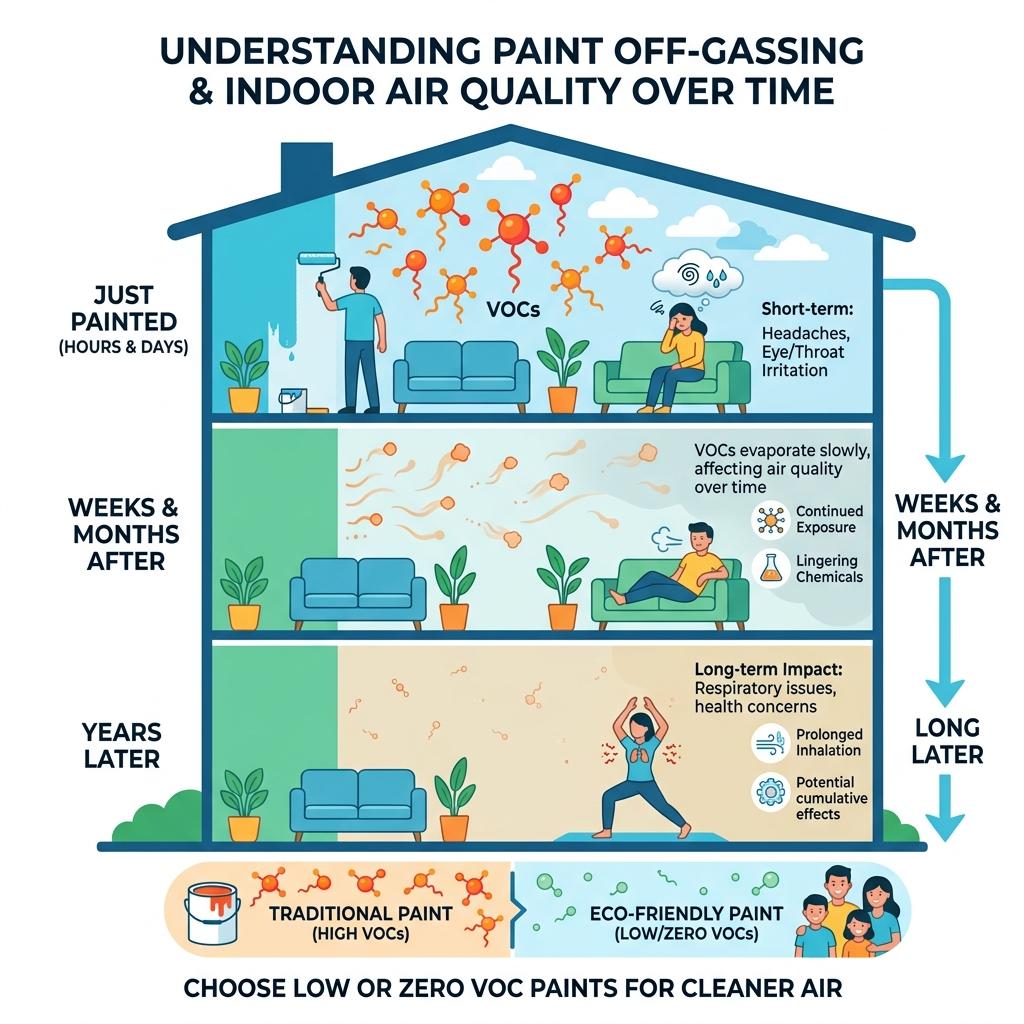
Why Non-Toxic Building Materials Matter

For many, a house is just bricks and paint. But there’s something we’re missing. We aren’t just living in buildings, we are literally breathing there.
And some of what we breathe indeed comes from chemicals our house slowly releases into the air.
This is precisely why the idea of non-toxic building materials has become important. Let me put this simply. If you buy a new wardrobe, or paint a bedroom with what feels like the usual bold colour. After the first couple of days, there’s this familiar ‘new smell’.
We brush it aside.
This “smell” in reality is just tiny chemical fumes escaping from the material and the paint into our home, a cocktail that can include formaldehyde, other VOCs. Now what if you are one of the people who sleeps for say, eight to ten hours in that bedroom every night? You are now inhaling a tiny cocktail of chemicals time and time again, every day.



What could this lead to?
This may have small but noticeable effects over time, including:
- body aches
- fatigue
- poor sleep
- more allergies for some
Over the years, you would be surprised not to see any direct effect, for as long as these chemicals slowly seep.
And since symptoms don’t immediately come out, the whole thing goes unnoticed.
It’s simple when you’re just thinking of non-toxic materials like:
- Wood products are free from harsh glue.
- natural paints that don’t contain so many harsh chemicals.
- Clay and lime paints for the walls
- Insulation using safe, natural, or mineral sources
Then, the air inside your house will remain cleaner and more stable. Let me give you an everyday example. Compare two rooms: Room A will have a new, brightly coloured, strong-smelling paint with cheap synthetic furniture. Although it’s new and shiny and might feel clean at first sight, you know the chemical smell might hang around for ages. Whereas room B may have low-smelling paint, natural wood furniture, and a better level of insulation.
These two rooms may seem indistinguishable at first sight.
You sleep in room B and notice yourself having deeper and better sleep. You wake up feeling refreshed. No aches, no tired eyes.
How?
Simply because you’re not breathing tiny chemicals in while you sleep and for hours through the day, therefore, non-toxic building materials have been largely associated with a “health and wellness lifestyle.” The truth is that they serve to support healthy, thriving lives without added risk from indoor air quality.
As a society, we’re slowly realizing that buildings aren’t just where we live, they’re places we spend nearly all of our time, and that those environments matter.
The world is already changing the way it thinks about construction and creating spaces to thrive. A truly successful building in the 21st century won’t just be built with sturdy foundations, energy-efficient windows, or beautiful finishes. It will be built with the intent to support and nourish the people who will inhabit it, day in and day out. It will be so subtly comfortable, so peacefully conducive, that its true genius is only apparent in how you simply feel there-healthy, comfortable, home.