
How Circadian Lighting for the Home Affects Your Health

Months ago, I had a conversation with a software engineer in his 20s, and there was one single pain point he repeated over and over again:
“I sleep 7 to 8 hours every night, but still feel tired when I wake up.”
He’d tried everything: expensive mattresses, supplements, diet changes. It just didn’t work.
So, I asked him one question: “What does your evening look like?”
He laughed and responded, “Laptop till midnight, bright room lights, and phone scrolling in bed.”
That was it. The problem wasn’t how long he slept, but exposure to light.
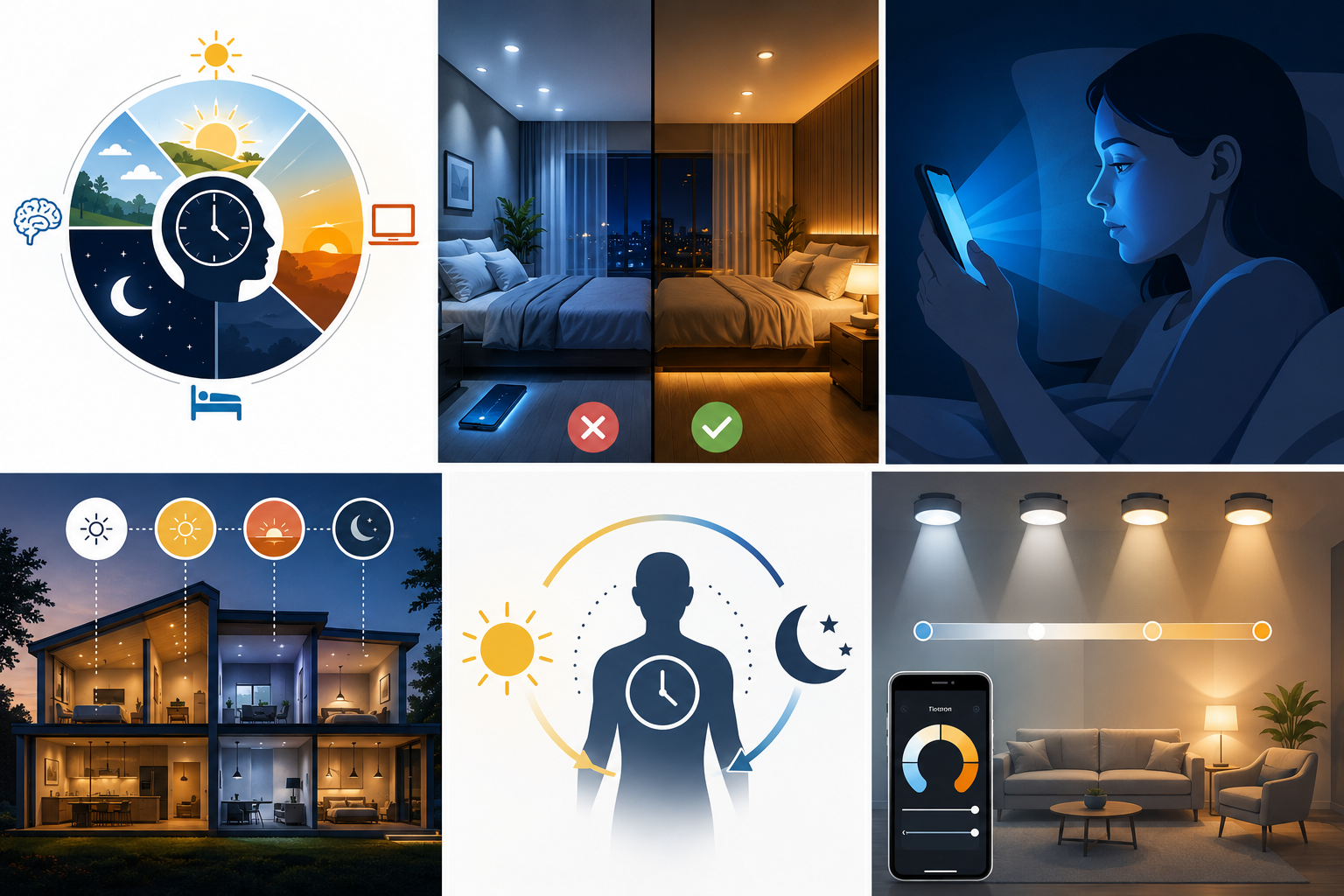
This is a major overlooked problem. Our bodies are designed to respond to the natural rhythms of light cycles thousands of years in the making. Sunlight in the morning says, “wake up,” and darkness at night says, “it’s time to rest and repair.”
However, in modern homes, this system is in complete disarray. You might be surrounded by:
- Bright, artificial white LED lights after the sun goes down
- The glowing blue light of your phone or computer screen aimed directly at your eyes
- Bedrooms that are nowhere near as dark as they should be
- Late-night TV or overhead lights mimicking the brightness of day
In response to this, our brains say: “Wait, it’s still bright? The day isn’t over yet.” And crucial sleep hormones, like melatonin, never really get signaled into action. So even if you get eight hours in bed, your body still isn’t prepared to truly fall into a deep, restorative slumber.
This is why circadian lighting for the home is so important. Let’s look at two contrasting scenarios:
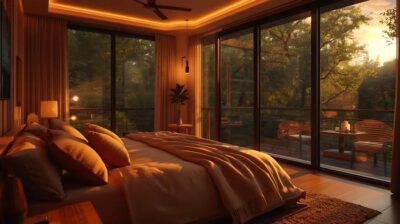

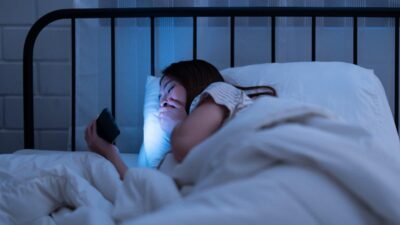
Home A (Typical modern home)
- Evening lights: Bright white LED
- Screen time in bed: Hours before sleep
- Lighting control: Minimal control over light color temperature
- Bedroom darkness: Often affected by outside light, incomplete darkness
- Outcome: Difficulty initiating sleep, fragmented and light sleep, fatigue upon waking despite sleeping enough.
Home B (Circadian-aligned home)
- Evening lights: Warm, dim, ambient lighting
- Screen time in bed: Limited/none before sleep
- Lighting control: Deliberate choice of warm light, lower intensity after dark
- Bedroom darkness: Very dark and free from artificial light intrusion
- Outcome: Falls asleep quickly, sleeps deeply, wakes naturally refreshed with plenty of energy.
The difference between these is biological, not psychological. In fact, even small amounts of blue light at night can delay the release of melatonin for hours, effectively shifting your internal clock without your awareness. Just consider how many people you know who fit Home A’s description daily – remote workers, students, remote employees – everyone unknowingly conditioning their brain to be in a perpetual “daytime” mode.
These small tweaks, collectively, can have a massive impact on your body’s biological clock and natural sleep/wake cycle. Beyond the obvious sleep improvements, this can lead to better sustained energy levels, clearer mental function, more stable moods, hormonal balance, and even enhanced productivity throughout the day. Lighting has become an invisible but incredibly powerful component of our overall health. While we tend to focus on what we eat, how we move, or the medications we take, we often neglect the pervasive impact of the environment that governs our biology day in and day out. Circadian lighting compels us to re-evaluate that, realizing that sometimes, feeling tired isn’t a sign we’re doing too little; it’s that our surroundings are subtly telling our body the wrong time of day.