
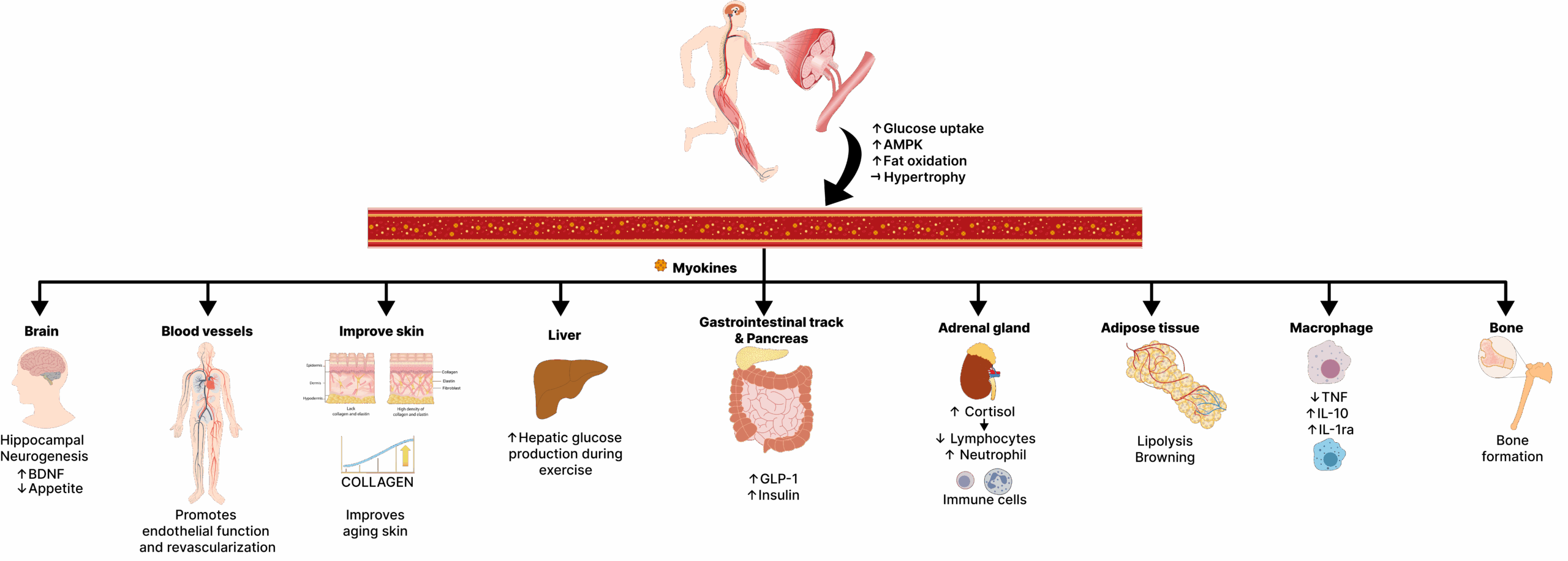
The Muscle-Brain Connection: The Role of Exercise-Induced Myokines in CombatingAging-Related Diseases

Physical exercise has long been recognized for its numerous health benefits, including its protective effects against sarcopenia and neurodegenerative diseases. A key factor behind exercise’s widespread benefits is the release of myokines, which act as messengers in the muscle-brain communication process. Various exercise modalities influence myokine release and their potential to mitigate aging-related cognitive decline and muscle dysfunction.
What Are Myokines?
Myokines are a diverse group of peptides and proteins that facilitate communication between skeletal muscles and various organs, including the brain. They play a crucial role in processes such as neuroprotection, inflammation regulation, and energy metabolism. Some key myokines released in response to exercise include:
- Brain-Derived Neurotrophic Factor (BDNF)
- Insulin-Like Growth Factor 1 (IGF-1)
- Vascular Endothelial Growth Factor (VEGF)
- Cathepsin B (CATB)
- Irisin
- Interleukin-6 (IL-6)
How Exercise Affects Myokine Secretion
Different forms of exercise (e.g., aerobic exercise, resistance training, and combined exercise) impact myokine secretion in distinct ways. Aerobic exercise, in particular, is a potent stimulator of a wide range of myokines, reinforcing its role in enhancing both cognitive function and muscle health as we age.
The varying impacts of different exercise types on myokine release highlight the importance of tailored exercise prescriptions. Personalized exercise programs may help maximize health benefits, especially for aging populations at greater risk for cognitive decline and muscle dysfunction.
Author
William Wallace, Ph.D.
Ph.D. | Product Development, Scientific Affairs, and Regulatory Compliance | Dietary Supplements, Ingredients, and Health Education